Climate risks push Indonesia to sell yen-denominated blue bonds

Sign up now: Get insights on Asia's fast-moving developments

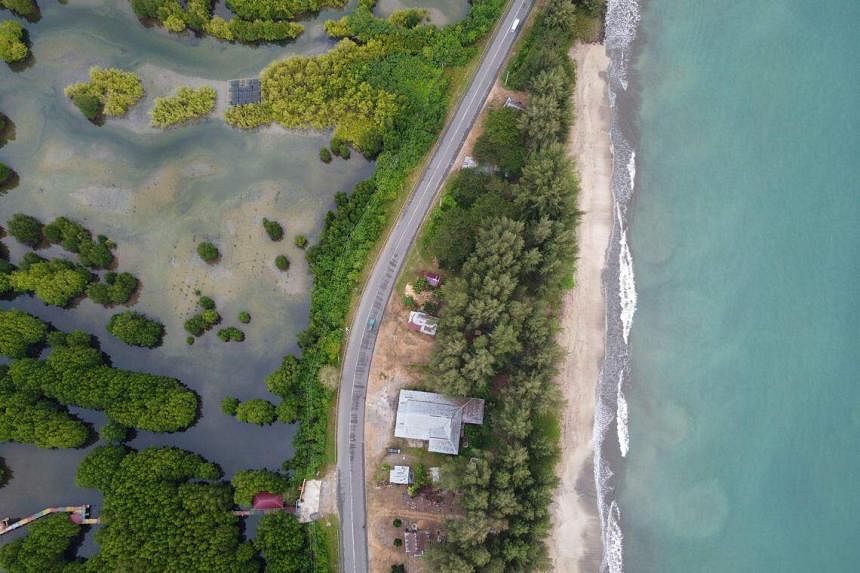
epa10629380 An aerial photo taken by a drone shows the Mangrove Ecotourism area separated by the main road to the Indian Ocean in Gampong Baro Sayeung, Aceh Jaya Indonesia, 14 April 2023. This mangrove area, which had been completely destroyed by the 2004 tsunami. has begun to green after replanting efforts by locals and conservationists. Rising sea levels have caused rapid coastal erosion in Aceh. In addition, the 2004 tsunami disaster also contributed greatly to the destruction of mangrove forests on the west coast of Aceh. The real result is a massive reduction in land mass due to coastal erosion and the loss of mangrove forests.  Director of the Aceh Jaya Manggrove Institute Foundation, Abdul Hadi, believes that good mangrove forests can protect land areas from rising sea levels and coastal abrasion. His AMI Foundation supports mangrove planting activity throughout Aceh Jaya by donating seeds for free, and continuing to plant throughout the year.  EPA-EFE/HOTLI SIMANJUNTAK  ATTENTION: For the FOCUS essay text go to https://epaimages.com/misc.pp?code=section-focus

The Mangrove Ecotourism area separated by the main road to the Indian Ocean in Gampong Baro Sayeung, Aceh Jaya, Indonesia.

PHOTO: EPA-EFE

Google Preferred Source badge

Indonesia is turning to the yen market for a rare sale of blue bonds to raise funds for ocean-related projects. 

The South-east Asian nation is marketing a Samurai deal, which includes several blue bond tranches. It would be the first such issuance of yen-denominated debt from a foreign borrower, according to the underwriters.

Japanese seafood company Maruha Nichiro also sold the country’s inaugural blue note in 2022.

Only a handful of issuers globally have sold blue bonds, which were pioneered by the island nation of Seychelles in 2018.

The variant of green debt typically channels funds into areas such as marine conservation and improving water resources, underscoring some of the issues posed by climate change. 

Even so, issuance has been scarce, especially with increasing scrutiny on the use of funds raised from environmental, social and governance debt. 

Proceeds from Indonesia’s sale will fund investments in ocean conservation and climate change mitigation programmes, according to a filing from the issuer.

Indonesia is the world’s largest archipelago country, consisting of thousands of islands. 

Some other sovereign issuers are exploring the Samurai bond market to tap yield-hungry Japanese investors, especially as the Bank of Japan’s ultra-dovish policy keeps rates anchored close to zero. BLOOMBERG

See more on